PART 1:
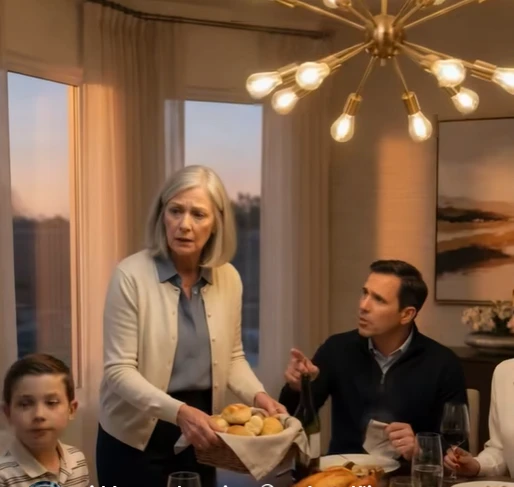
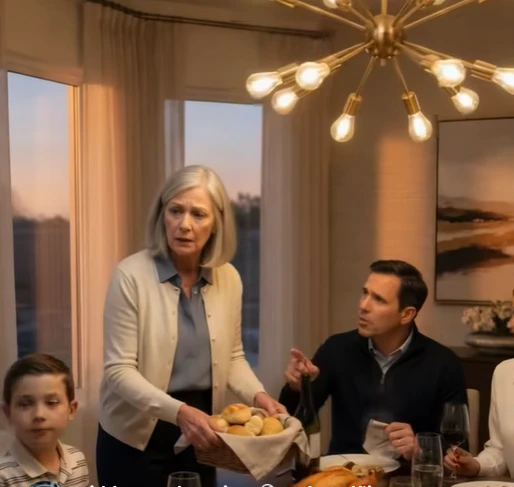
The night my son asked when I planned to leave his house, I was simply passing the dinner rolls. I remember that moment more clearly than anything else— the rolls, still warm, nestled in a linen-lined basket. The rest of the table, the chicken, the soft lighting of the chandelier, all seemed distant compared to the sharpness of his question. That moment—utterly ordinary on the surface—shifted everything in ways I couldn’t predict. Two years had passed since I moved in with Daniel and his family. During that time, I had learned to make myself small, blending into their routine without ever truly becoming part of it. I had learned to cook in someone else’s kitchen, fold their laundry, pick up the slack when the kids were late from school. I did everything I could without stepping out of line, without making anyone uncomfortable. But what I hadn’t realized, what I couldn’t anticipate, was how quickly I would become a burden in my son’s eyes. “”Mom,”” Daniel said, his eyes still focused on his plate, his voice flat and weary, “”when are you planning to move out? What’s the plan?”” The words hit me like a shock, delivered without anger, just a tired resignation. The table fell silent. Even Caleb, my thirteen-year-old grandson, had stopped hiding behind his phone. Sophie, who was talking about her day, stilled mid-sentence. I looked at my son. Forty-four years old now, the same boy who used to cry over a dying pigeon in the backyard, the same one who once drove thirty miles in a storm to bring me groceries when I was sick. And now he was asking me when I would leave. I set the basket of rolls down. I folded my napkin. And I stood. “Excuse me,” I said, my voice steady. I am proud of how calm I was. I didn’t rush to pack. I didn’t cry or make a scene. I simply walked out of the room, through the kitchen, and into the backyard. The cold air stung against my skin, but it didn’t matter. The house had paused inside, frozen by the weight of his words. I sat outside, alone, letting the silence settle around me. Through the glass, I saw the movements of the family, awkward and hesitant, like they hadn’t expected their words to have consequences. No one came after me. That silence was the most honest thing that had happened in that house in two years. I sat there for almost an hour, thinking of Harold. He had been gone for two years and three weeks. One Tuesday afternoon, he simply stopped existing. He was in his chair, doing the crossword, when I went to make iced tea. When I returned, he was gone, and I didn’t even understand until it was too late. The grief had made every decision feel foreign, like I was living someone else’s life. So when Daniel had asked me to move in with him, I said yes. The house in Tucson, where Harold and I had built our life, felt too empty. And so, I agreed to leave it behind. But now, Daniel’s house was beautiful, bright, modern, but it didn’t feel like mine. I had been given the guest room, far from the heart of the home, with no space to call my own. I told myself I was adjusting. But every day I felt myself growing smaller. I cooked. I helped. I tried to be useful. But the more I did, the more invisible I became. Then came that Sunday morning, when I overheard Renee’s voice in the hallway, questioning my presence in their home. “”She eats our food, uses our utilities, and contributes what exactly?”” That was when I knew. I had to leave. But I also needed to understand something more. I wasn’t just there by accident. I wasn’t just an extra person in their lives. When I sold the house in Tucson, Daniel had been firm about the decision. He said it didn’t make sense to keep it—he was right, in a way. But the money I had from that sale wasn’t enough to buy anything new in Phoenix and still have enough left for the future. I thought I understood my limits. Then the lottery ticket came into my life by accident…. ”
PART NEXT:
Then the lottery ticket came into my life by accident.
I had stopped at a gas station on the edge of town because I needed windshield wiper fluid. That was all. The lottery display near the register was flashing some impossible jackpot number, and the young cashier smiled.
“Feeling lucky today?”
“No,” I said.
Then I bought a ticket anyway.
Harold used to do that.
Not because he believed he would win. Because he enjoyed imagining what he would do if he did.
Three weeks later, I was sitting alone in the guest room at Daniel’s house when I checked the numbers.
The first number matched.
Then the second.
Then the third.
By the time the final number appeared on the screen, my hands were shaking so badly that I dropped my phone.
Eighty-nine million dollars.
I checked the ticket six times.
Then twelve.
Then I drove across town to verify it.
The woman behind the counter nearly fainted before I did.
For weeks, I told no one.
Not Daniel.
Not Renee.
Not the children.
Not a single soul.
I hired attorneys.
Financial advisors.
Security consultants.
I learned that sudden wealth could destroy families faster than poverty ever could.
So I waited.
And watched.
I wanted to know whether my family loved me or merely tolerated me.
The answer arrived with a basket of dinner rolls.
“When are you planning to move out?”
The next morning, I woke before sunrise.
The house was silent.
I packed two suitcases.
Everything I owned fit inside them.
Two years of my life reduced to luggage.
I paused at Caleb’s bedroom door.
Then Sophie’s.
I didn’t wake them.
I simply stood there for a moment.
Remembering birthdays.
Homework help.
Movie nights.
Band concerts.
All the moments that had mattered to me.
Then I left.
No note.
No drama.
Just quiet footsteps disappearing from a house that no longer wanted me.
Three hours later, I was sitting across from a real estate broker.
A glossy brochure lay on the desk between us.
I had seen the house before.
Daniel had shown it to me online six months earlier.
Five bedrooms.
Mountain views.
A pool.
The dream home.
The one he and Renee constantly talked about.
The one they couldn’t afford.
The broker smiled.
“Beautiful property.”
“Yes,” I said.
“I’ll take it.”
The smile vanished.
“I’m sorry?”
“I’ll pay cash.”
The room became very quiet.
The news reached Daniel four days later.
Not because I told him.
Because the house sale became local gossip among agents.
Someone mentioned the mysterious cash buyer.
Someone else mentioned my name.
Then someone recognized my photograph from a charity event.
By dinner time, Daniel was calling my phone nonstop.
I ignored every call.
The next day, he appeared at my hotel.
The concierge phoned my suite.
“There’s a man here asking for you.”
I looked through the lobby camera feed.
My son.
Pacing.
Nervous.
A decade older than he had looked the week before.
I came downstairs.
The moment he saw me, relief flooded his face.
“Mom.”
I said nothing.
“Why didn’t you tell me?”
“Tell you what?”
“The money.”
There it was.
Not Are you okay?
Not Where have you been?
The money.
I folded my arms.
“Why would I?”
He opened his mouth.
Closed it.
Opened it again.
For the first time, he seemed unable to find words.
“You’re my mother.”
“Yes.”
His eyes dropped.
The silence stretched.
People moved through the lobby around us.
A fountain trickled nearby.
Finally, I asked the question that had haunted me for months.
“When did I become a burden, Daniel?”
His face crumpled.
Not dramatically.
Just a tiny fracture.
Like glass finally admitting it was broken.
“I never meant—”
“But you said it.”
“I was stressed.”
“You said it.”
“Mom…”
“You asked when I was leaving.”
The words hung between us.
Heavy.
Permanent.
Impossible to take back.
His eyes filled.
And for a moment I saw the little boy again.
Not the man.
The child.
The one who once climbed into my lap after nightmares.
The one Harold taught to ride a bicycle.
The one I loved more than my own heartbeat.
“I am sorry,” he whispered.
I believed he meant it.
But that didn’t erase what happened.
The truth emerged two weeks later.
And it arrived from the person I least expected.
Caleb.
He asked to see me alone.
We met at a café.
The teenager looked terrified.
His fingers kept twisting around a napkin.
Finally, he slid a flash drive across the table.
“What is this?”
His throat tightened.
“Dad doesn’t know I took it.”
A chill ran through me.
“Caleb.”
“I heard Mom and Dad talking.”
My stomach dropped.
He stared at the table.
“They knew about your money.”
The world seemed to stop.
“What?”
“They found paperwork.”
I couldn’t breathe.
Caleb’s eyes filled with tears.
“They thought you didn’t know they knew.”
Every sound in the café faded.
The clinking dishes.
The conversations.
Everything.
I stared at him.
Then at the flash drive.
“What are you saying?”
His voice cracked.
“I’m saying Dad asked you to move in because of the house sale money.”
The blood drained from my face.
“No.”
“He did.”
The boy was crying now.
“He found documents after Grandpa died.”
I felt physically ill.
Caleb pushed the flash drive closer.
“I recorded them.”
That night, I listened.
And my heart broke all over again.
Daniel’s voice.
Renee’s voice.
Conversations stretching back almost two years.
Discussions about my finances.
My assets.
My inheritance.
Even speculation about what they would eventually receive.
Not once.
Repeatedly.
For hours.
There was no misunderstanding.
No innocent explanation.
The invitation into their home had never been entirely about love.
It had also been about money.
I sat in my penthouse suite until dawn.
Listening.
Then listening again.
Every recording felt like losing Harold a second time.
Because the family we built together had not survived him.
The confrontation happened one week later.
Everyone came.
Daniel.
Renee.
Caleb.
Sophie.
Even my attorney.
The new house stood behind us.
Magnificent.
Perfect.
The dream.
Daniel looked confused.
“Why are we here?”
I handed him headphones.
“Listen.”
He did.
At first, he frowned.
Then paled.
Then sat down heavily on the front steps.
Renee went white.
The recordings continued.
Every selfish conversation.
Every calculation.
Every cruel remark.
Every hidden motive.
When the final file ended, silence swallowed the afternoon.
Wind moved through nearby trees.
A bird landed on the fence.
Nobody spoke.
Finally, Sophie whispered, “Mom?”
Renee couldn’t look at her daughter.
Caleb stared at the ground.
Daniel looked shattered.
“What have I done?” he whispered.
No one answered.
Because there was nothing left to say.
The truth had already spoken.
Their marriage did not survive the year.
Not because of me.
Because secrets rarely travel alone.
Once honesty entered the room, everything else followed.
Daniel learned about debts.
Hidden accounts.
Other lies.
The foundation collapsed.
Renee left.
The children chose to spend most of their time with their father.
And Daniel began the long work of becoming someone he could respect again.
It wasn’t quick.
Or dramatic.
Just small choices.
Repeated every day.
Apologies without excuses.
Actions without speeches.
The hardest kind of redemption.
The real kind.
Three years later, I stood on the porch of a different house.
Not the dream mansion.
I had sold it.
Instead, I bought a beautiful property overlooking a lake.
Not for luxury.
For purpose.
Part of it became a residence for widows and widowers struggling after loss.
People like me.
People who woke up one morning and discovered silence living where love used to be.
The project flourished.
Lives changed.
Friendships formed.
Laughter returned to rooms that had forgotten it existed.
And for the first time since Harold died, I felt useful again.
Not because someone needed my money.
Because someone needed me.
There is a difference.
A very important one.
One autumn evening, Daniel arrived with Caleb and Sophie.
The sunset painted the water gold.
Nobody spoke immediately.
We simply watched the light.
Then Daniel handed me a small envelope.
Inside was a photograph.
Old.
Faded.
Harold and me.
Young.
Laughing.
Standing beside our first tiny house.
On the back, in Harold’s handwriting, were words I hadn’t seen in decades.
Take care of each other.
That’s the whole job.
My vision blurred.
Daniel swallowed hard.
“I forgot that.”
I reached for his hand.
He squeezed mine like he used when he was five years old.
Not a businessman.
Not a father.
Not a grown man carrying regrets.
Just my son.
My son who had failed.
My son who had learned.
My son who had come back.
The lake shimmered beneath the setting sun.
Sophie rested her head on my shoulder.
Caleb sat beside me.
Daniel stared at the horizon.
And for the first time in many years, the empty space Harold left behind didn’t feel quite so empty.
Because I finally understood something.
The lottery hadn’t changed my life.
Not really.
The money simply revealed people for who they already were.
Their weaknesses.
Their greed.
Their love.
Their courage.
Their capacity to change.
And mine.
The greatest gift was never the eighty-nine million dollars.
It was the chance to discover that losing everything I thought I wanted had led me back to what truly mattered.
Family.
Not the version built on obligation.
The version rebuilt on truth.
As darkness settled over the water, Daniel quietly asked,
“Mom, are you happy?”
I looked at the people beside me.
The grandchildren I adored.
The son who had found his way back.
The life I had built with my own hands.
Then I smiled.
“Yes,” I said softly.
And for the first time since Harold’s last crossword puzzle sat unfinished on the table, it was completely true.
