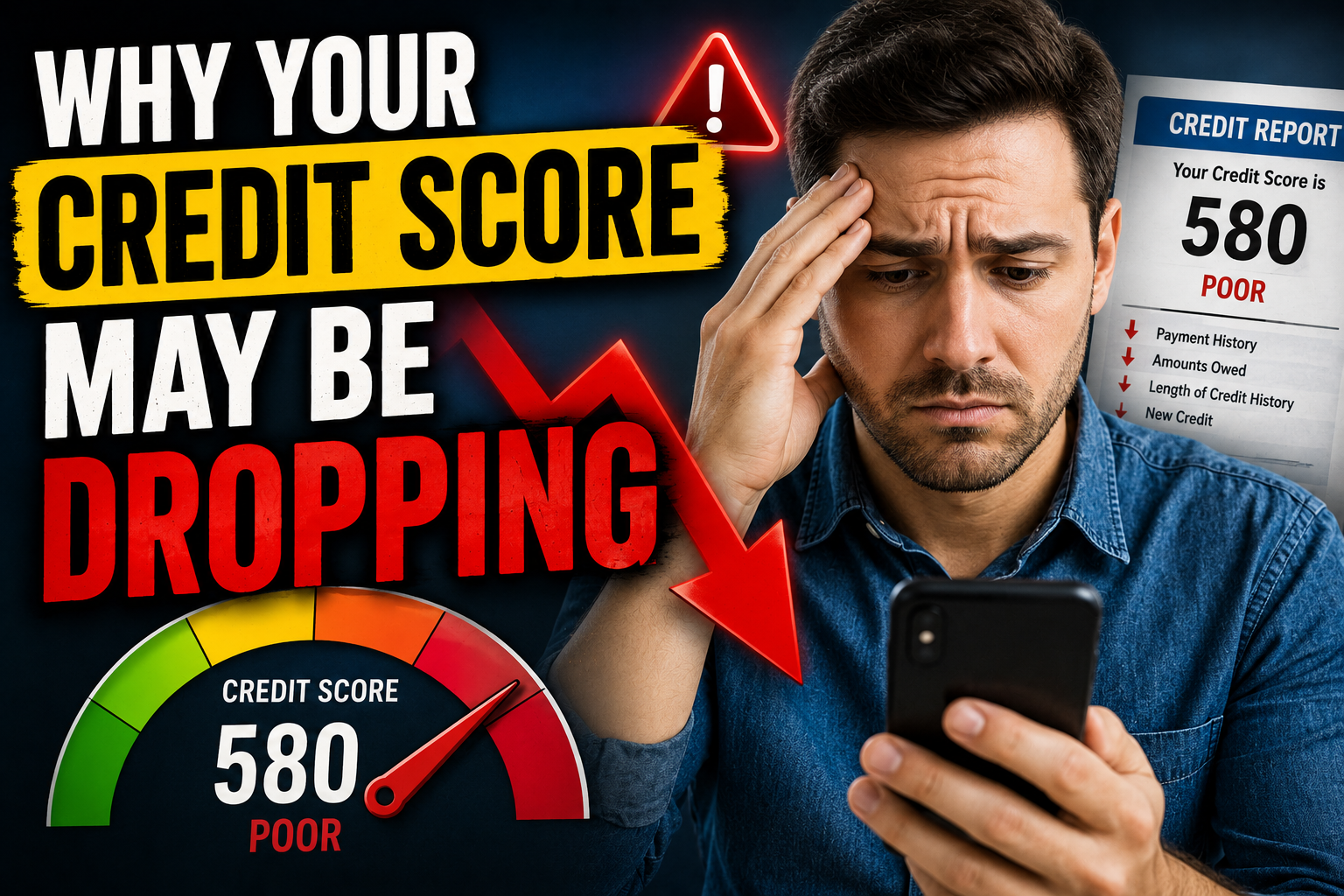


Your credit score plays a major role in your financial life. It can affect:
- loan approvals
- credit card offers
- apartment applications
- insurance rates
- interest costs
So when your credit score suddenly drops, it can feel confusing and stressful.
The good news? Many common causes are fixable once you identify the problem.
Here are some of the biggest reasons your credit score may be dropping in 2026.
1. Missing a Payment
Payment history is one of the most important parts of your credit score.
Even one missed payment can lower your score significantly.
Late payments may stay on your credit report for years.
Better Move:
Set up automatic payments or reminders to avoid missing due dates.
2. Using Too Much Credit
Credit utilization measures how much credit you use compared to your total limit.
Experts often recommend staying below 30%.
Credit Utilization=Current BalanceTotal Credit Limit×100\text{Credit Utilization} = \frac{\text{Current Balance}}{\text{Total Credit Limit}} \times 100
Example:
If your total limit is $10,000, try to keep balances under $3,000.
High balances can signal financial risk to lenders.
3. Applying for Too Many Credit Cards
Every credit application creates a hard inquiry on your report.
Too many applications within a short period may temporarily lower your score.
Better Move:
Only apply for new credit when necessary.
4. Closing Old Credit Accounts
Older accounts help strengthen your credit history length.
Closing old cards may:
- shorten your average account age
- increase utilization ratio
- reduce available credit
Better Move:
Keep older accounts open if possible, especially those without annual fees.
5. Errors on Your Credit Report
Sometimes your score drops because of incorrect information.
Common errors include:
- wrong balances
- inaccurate late payments
- accounts that are not yours
Better Move:
Check your credit reports regularly for mistakes.
6. Carrying High Credit Card Balances
Large balances can negatively affect your score even if payments are made on time.
Lenders may see heavy borrowing as risky behavior.
Better Move:
Pay down balances consistently whenever possible.
7. Co-Signing Loans or Shared Accounts
If you co-sign a loan or share a credit account, the other person’s activity can affect your credit score too.
Missed payments or high balances on shared accounts may lower your score.
Better Move:
Be cautious before co-signing financial agreements.
Final Thoughts
Credit scores can change for many reasons, but most problems are manageable once identified early.
Good financial habits like:
- paying on time
- lowering balances
- avoiding unnecessary debt
can help rebuild and protect your score over time.
Understanding how credit works is one of the smartest financial decisions Americans can make.